
Anthropic Studies Claude's Economic Impact and User Behavior


Key takeaways
- AI usage patterns vary significantly throughout the day and across different types of tasks.
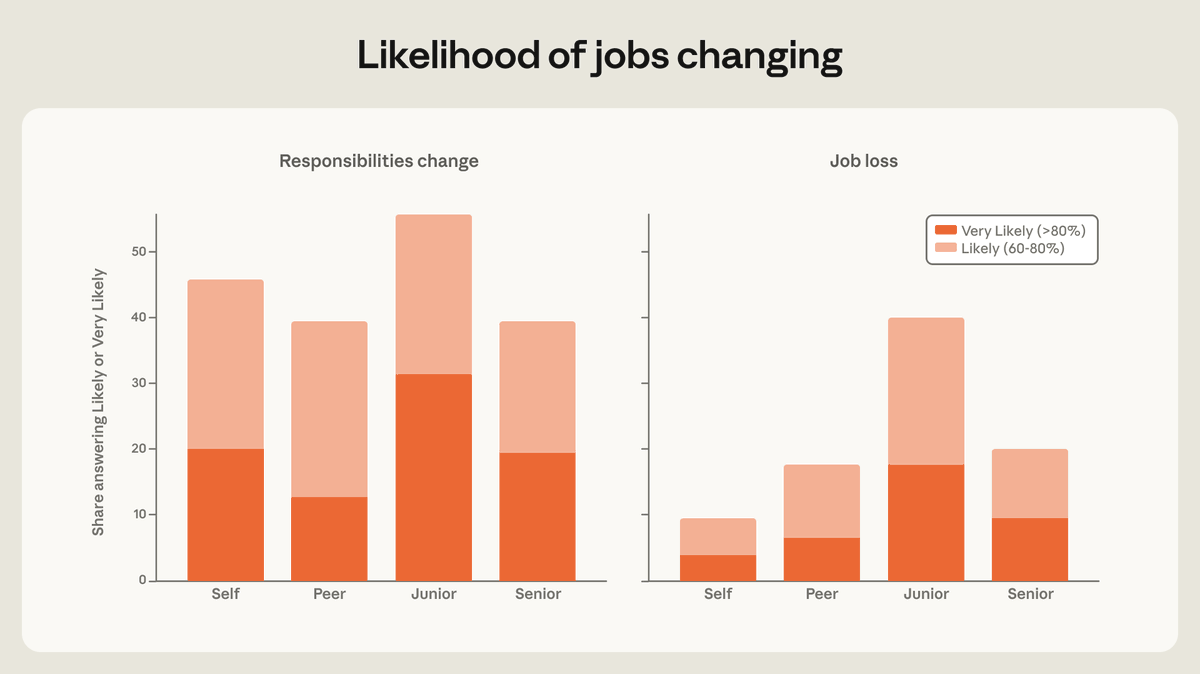
- Many professionals anticipate significant changes to their job responsibilities due to AI.
- Users who delegate more tasks to AI tend to be more optimistic about its impact on their careers.
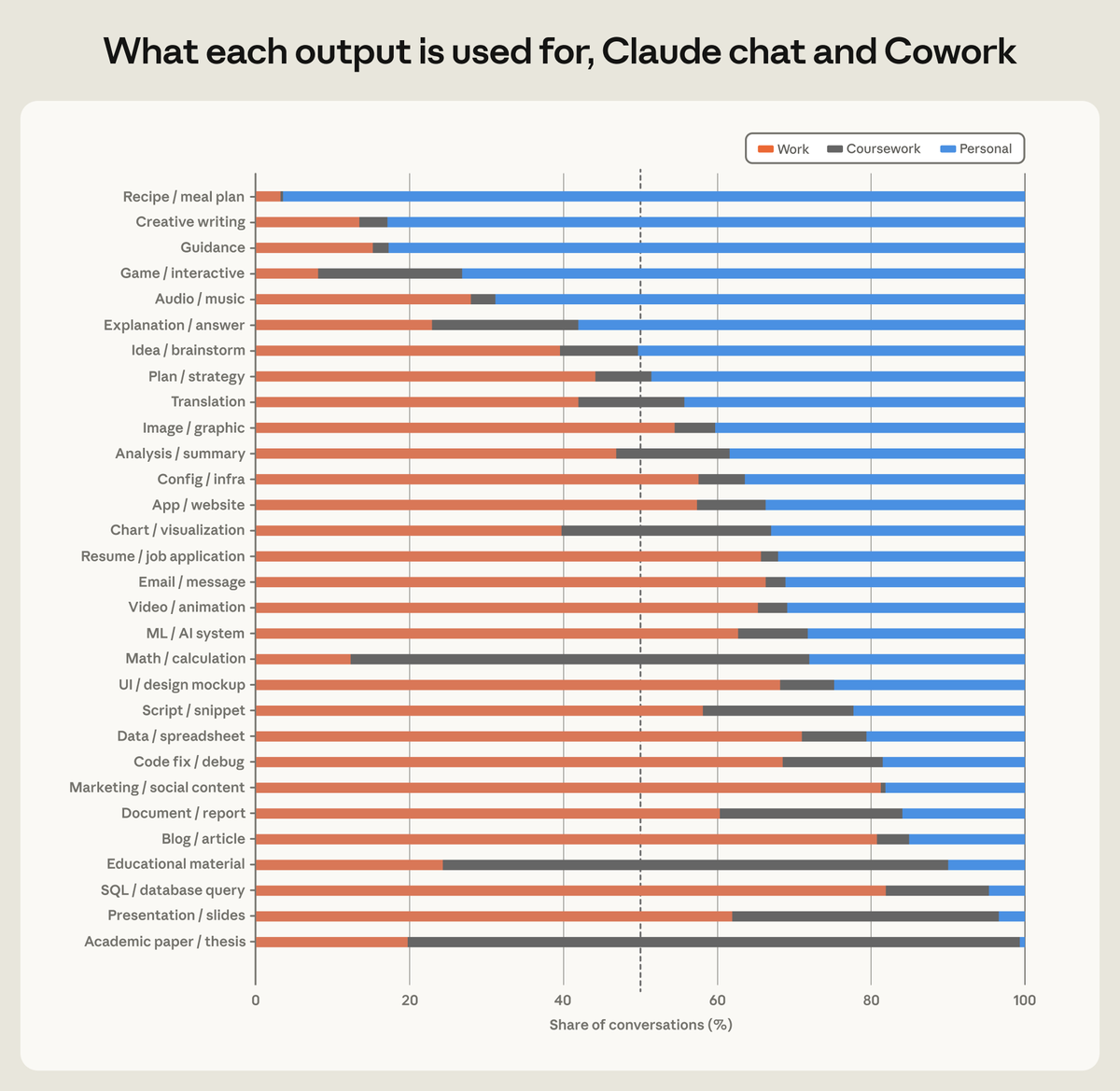
- Tracking AI "artifacts" provides a clearer picture of how AI outputs are utilized in different contexts.
Who benefits
Summary
Anthropic is advancing its research into Claude's economic impact, using hourly usage sampling and survey data to understand how AI integrates into daily life and work, and how user perceptions of AI's influence are evolving. The study tracks user output ("artifacts") and reveals changing work responsibilities and job security concerns among users.
Why it matters
This research provides critical insights into the real-world integration and perceived impact of AI tools like Claude on professional workflows and the economy, helping businesses understand adoption trends and future workforce implications. Professionals can use this data to anticipate changes in job roles, strategize AI integration, and address employee concerns about automation.
How to implement this in your domain
- 1Analyze internal AI usage data to identify similar patterns in employee adoption and output.
- 2Conduct internal surveys to gauge employee perceptions of AI's impact on their roles and job security.
- 3Develop training programs to help employees adapt to evolving job responsibilities due to AI integration.
- 4Formulate strategies for responsible AI deployment, considering both productivity gains and workforce transitions.
Original post by @AnthropicAI
"To keep pace with AI progress, we're advancing how we study Claude's economic impact. Hourly sampling and survey data show us how the cadences of life shape usage, what people produce with Claude, and how perceptions of AI's impact may be changing. Hour by hour, Claude usage is w…"
View on XOriginally posted by @AnthropicAI on X · view source
Want to go deeper?
Turn these trends into skills with Learnijoy's hands-on AI & tech courses.
Explore coursesMore in AI Research
LFM2.5-VL-3B Enhances Edge Vision Capabilities
A new model, LFM2.5-VL-3B, is introduced to provide better and faster vision capabilities specifically optimized for edge devices. This advancement aims to improve performance and efficiency for AI applications running locally.
Tiered KV Cache Boosts Large LLM Inference on SageMaker HyperPod
Running large language model inference at scale often involves a trade-off between large GPU instances and slow time-to-first-token due to KV cache limitations. This post describes building a tiered KV cache on Amazon SageMaker HyperPod, extending the cache into a shared, distributed NVMe pool with Curvine, allowing replicas to reuse cache at near-local-disk speeds on cost-efficient instances.
AI-Generated Dog Cancer Vaccine Idea Leads to New Startup
An Australian entrepreneur, Paul Conyngham, has launched Gamgee, a startup focused on personalized mRNA cancer vaccines for dogs, inspired by an AI-generated concept for his own pet. The company aims to expand its AI and genetics-driven personalized treatments to other species, including humans.