
State of AI Compute Index Refreshed, Shows Shifting GPU Landscape





Key takeaways
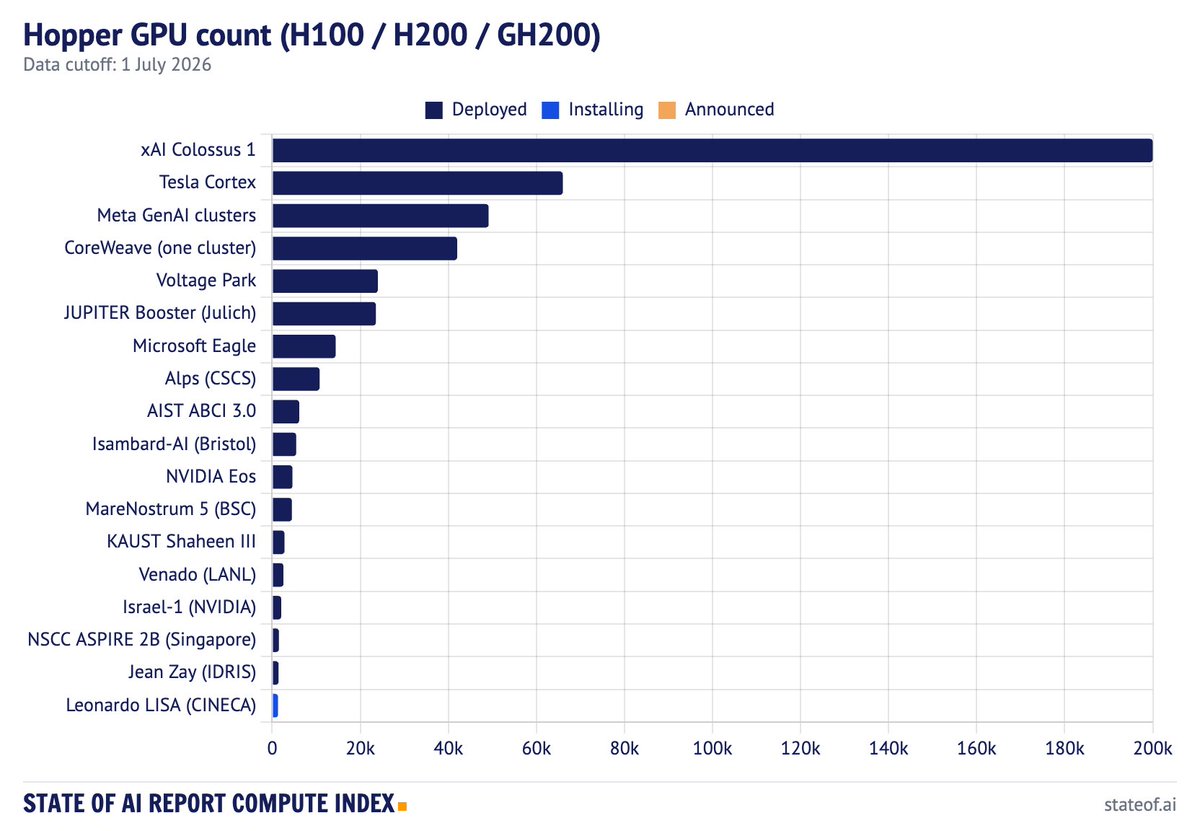
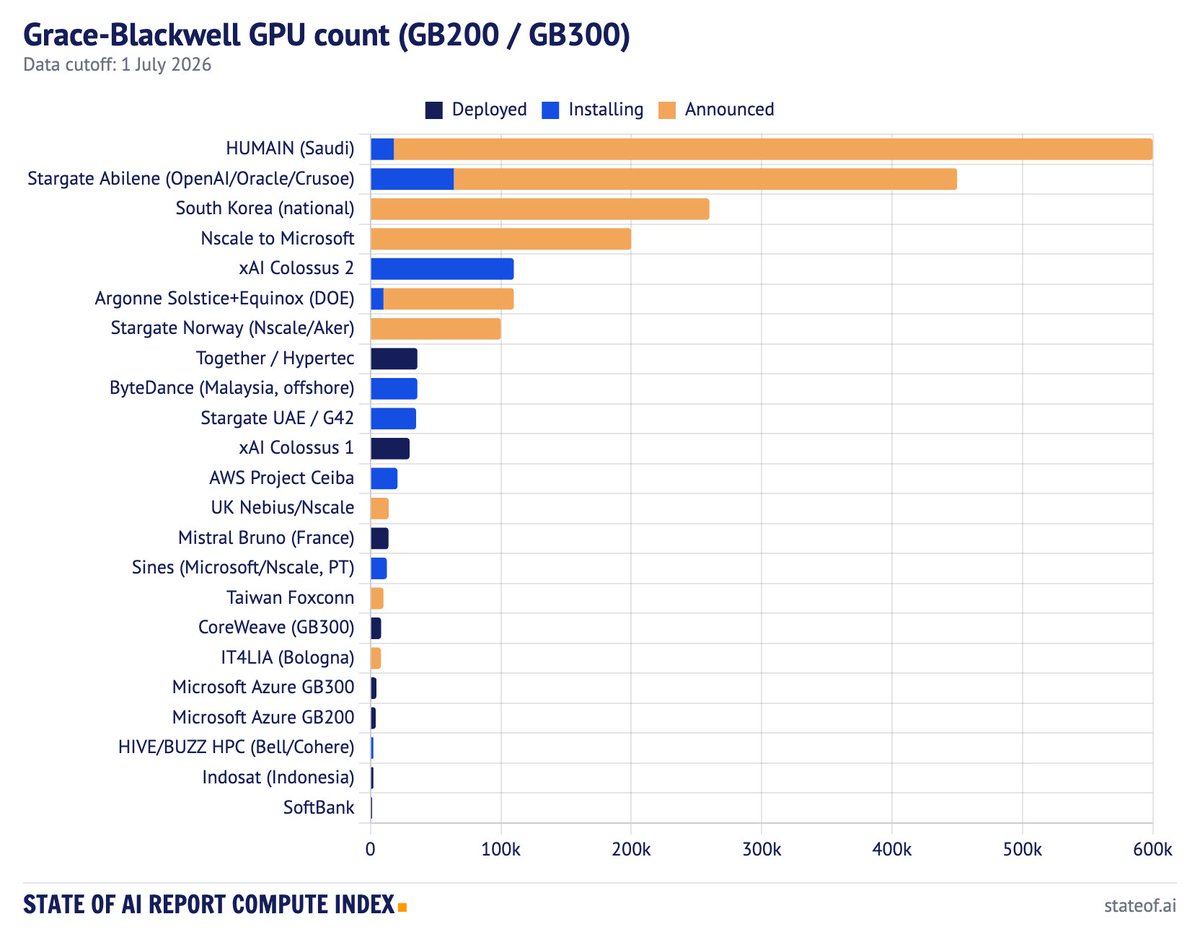
- NVIDIA's Hopper GPUs are now the dominant installed base, with Blackwell rapidly emerging.
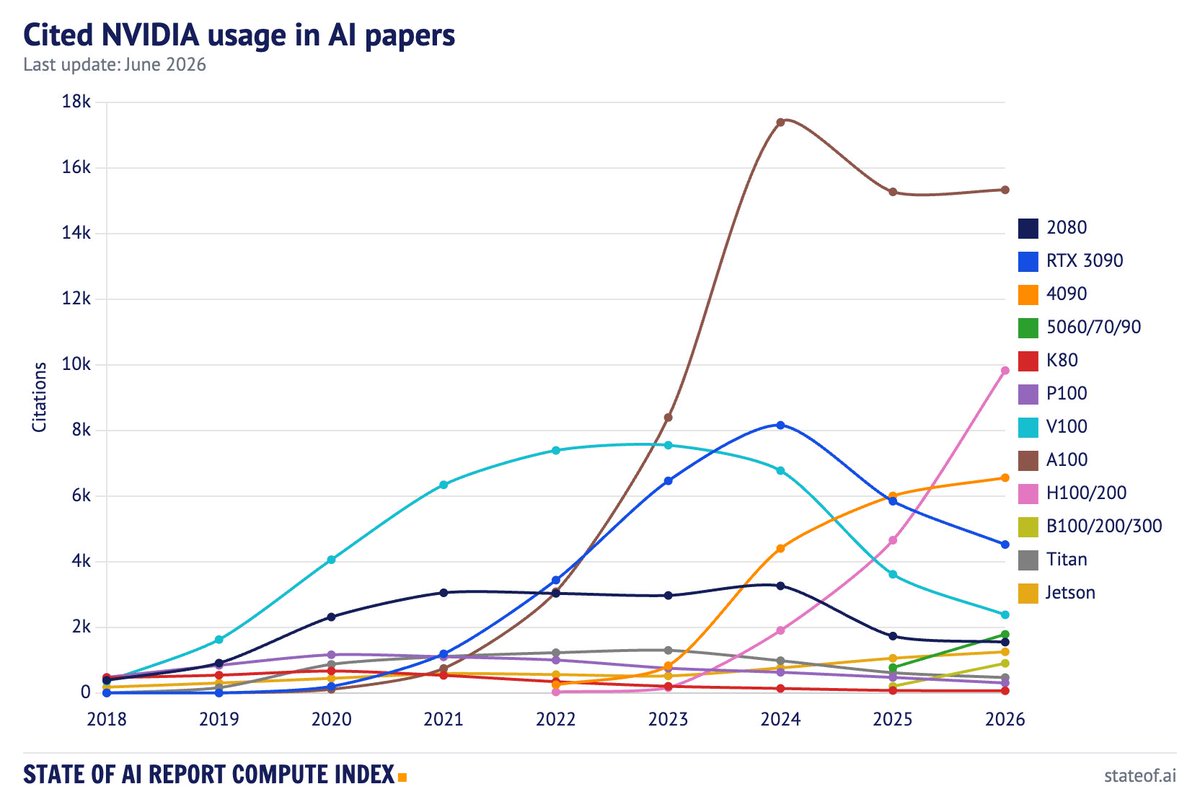
- NVIDIA maintains a strong lead in chip citations within AI research papers.
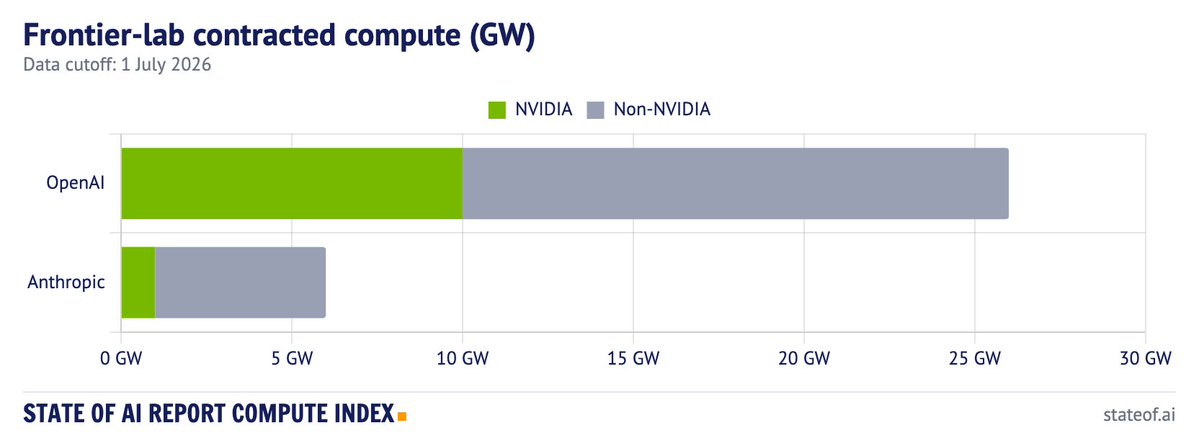
- Major AI players like OpenAI are diversifying their compute contracts beyond a single vendor.
- The Grace-Blackwell pipeline indicates massive future compute infrastructure build-outs.
Who benefits
Summary
The State of AI Compute Index has been updated to July 2026, revealing key trends in AI compute usage, researcher preferences, and cluster builds. The report details NVIDIA's product cycle, the rebound in chip citations, the status of challenger chips, and the significant deployment of Hopper GPUs.
Why it matters
This data is crucial for strategic planning, investment decisions, and understanding the competitive landscape in AI infrastructure, impacting hardware procurement, cloud strategy, and research directions.
How to implement this in your domain
- 1Review current compute infrastructure against industry trends to identify potential bottlenecks or opportunities.
- 2Evaluate diversification strategies for AI compute procurement, considering non-NVIDIA options for future projects.
- 3Forecast future compute needs based on projected AI model sizes and research directions.
- 4Engage with hardware vendors to understand their roadmap and secure access to next-generation GPUs.
Original post by @nathanbenaich
"we refreshed the @stateofai compute index with zeta alpha, now current to july 2026. 8 charts on where ai compute actually is, what researchers use in their work and the sizes of clusters being built now for a highlight thread! stateof(dot)ai/compute inside nvidia it is a product…"
View on XOriginally posted by @nathanbenaich on X · view source
Want to go deeper?
Turn these trends into skills with Learnijoy's hands-on AI & tech courses.
Explore coursesMore in AI News & Tools
AI Work Shifts Towards Leadership, Less Traditional Coding
The nature of working with AI is evolving, requiring professionals to adopt leadership-like skills such as strategic thinking and orchestration rather than solely focusing on traditional coding tasks.
B2B Marketers Seek Pardot Alternatives Amidst Rapid Industry Change
The marketing industry has undergone significant transformation, leading many B2B marketers to seek alternatives to traditional platforms like Pardot due to perceived lack of development. This shift highlights the need for marketing automation tools to adapt to evolving market demands.
Instagram Redesigns Wordmark; Zuckerberg Details AI Future
Instagram has unveiled a new wordmark, sparking debate about its design, while Mark Zuckerberg released a comprehensive memo outlining Meta's vision for AI development.