
User Switches to Open Models from Proprietary AI
Summary
A user reports transitioning from proprietary AI models like Claude to open-source alternatives, citing daily use of models such as GLM 5.2.
Why it matters
This trend suggests a potential shift in developer preference towards open-source AI, which could influence tooling, infrastructure, and talent acquisition strategies for companies.
How to implement this in your domain
- 1Evaluate the performance and cost-effectiveness of open-source models for specific tasks.
- 2Explore integration options for open models into existing development pipelines.
- 3Train internal teams on the nuances of deploying and managing open-source AI solutions.
- 4Monitor the open-source AI ecosystem for new and improved models.
Who benefits
Key takeaways
- Some developers are moving from proprietary to open-source AI models.
- Open models offer flexibility and control.
- GLM 5.2 is mentioned as a preferred open model.
- This trend could impact AI strategy and tooling choices.
Original post by @_akhaliq
"I use glm 5.2 in claude code via hf claude almost daily now moved over completely to open models"
View on XOriginally posted by @_akhaliq on X · view source
Want to go deeper?
Turn these trends into skills with Learnijoy's hands-on AI & tech courses.
Explore coursesMore in AI Engineering & DevTools
Fable AI Tip: Let Models Choose Lower-Power Subagents
A new tip for using Fable AI suggests allowing the model to exercise its own judgment in selecting appropriate lower-power subagents for coding tasks. This approach has shown promise in significantly reducing token usage.
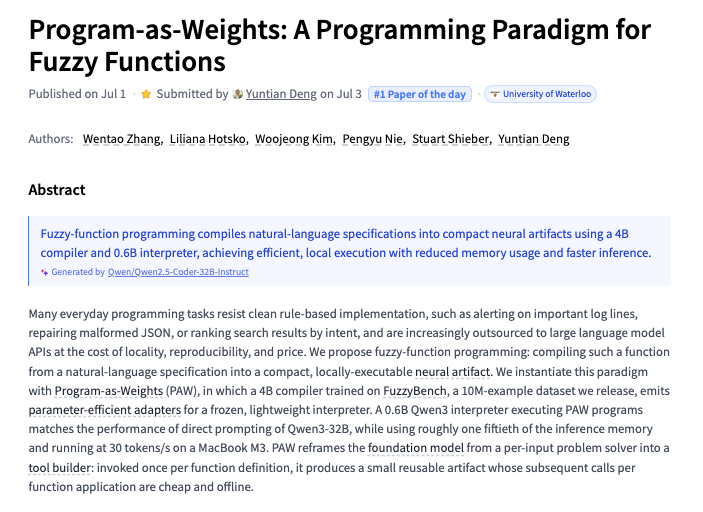
New Programming Paradigm for Fuzzy Functions Introduced
A new programming paradigm called 'Program-as-Weights' is proposed for developing fuzzy functions, offering a novel approach to handling uncertainty in computation.
Improving AI Prompting by Identifying Unknowns
The author shares a method for enhancing AI prompting, particularly with the Fable tool, by systematically discovering and addressing personal 'unknowns' to formulate more effective queries.