
DoorDash AI Research Optimizes Code Review with Hybrid Models
Key takeaways
- DoorDash's DashBench test validates hybrid AI models for code review.
- Combining open-source and proprietary AI can improve performance and reduce costs.
- The hybrid approach caught more bugs, including critical ones, than a single-vendor solution.
- Internal benchmarking is key to effectively integrating diverse AI technologies.
Who benefits
Summary
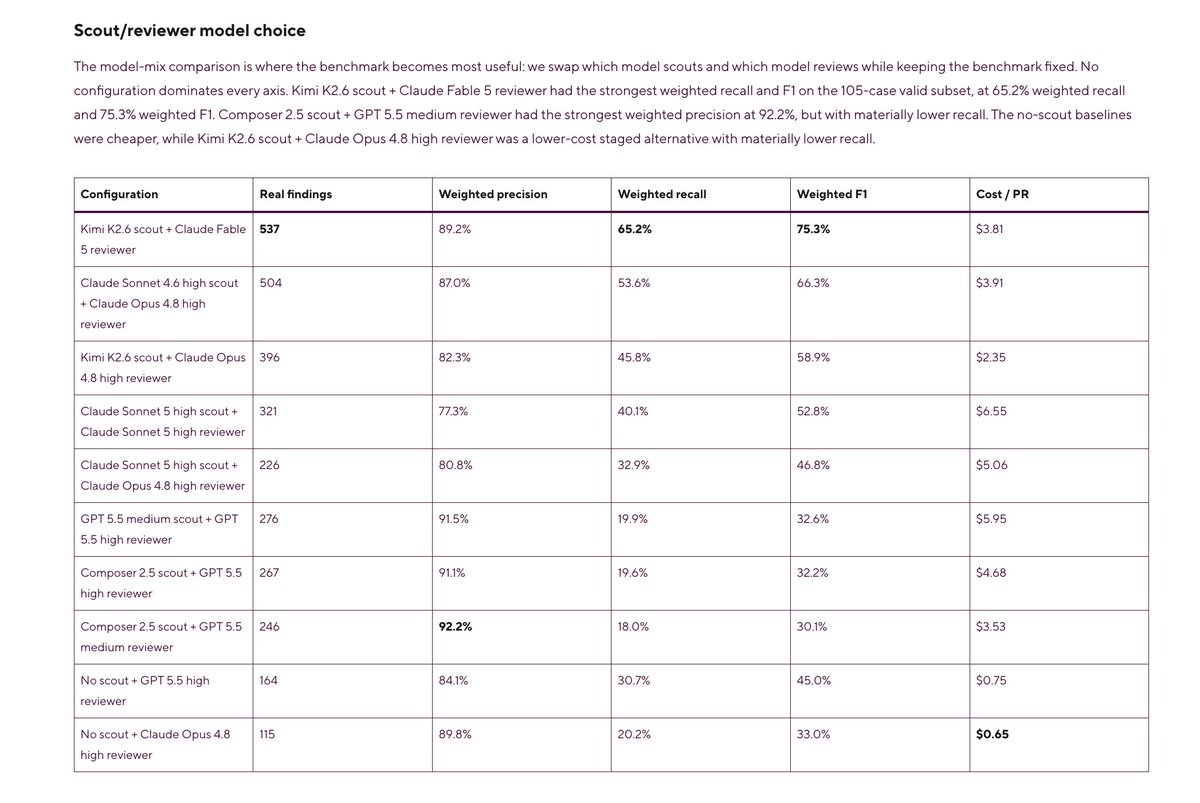
DoorDash's AI team developed an internal test, DashBench, to evaluate AI code reviewers, finding a hybrid model approach using an open-source model for skimming and a proprietary model for deep analysis improved bug detection and reduced costs. This method achieved a 65.2% success rate in catching real problems, outperforming an all-proprietary model setup.
Why it matters
Professionals can learn from DoorDash's practical application of AI in software development, demonstrating how hybrid model strategies can improve efficiency and reduce costs in critical engineering workflows like code review. This approach offers a blueprint for leveraging diverse AI capabilities to achieve specific business outcomes.
How to implement this in your domain
- 1Establish an internal benchmark to quantitatively evaluate AI tools for specific tasks.
- 2Experiment with combining different AI models (open-source and proprietary) for multi-stage processes.
- 3Analyze cost-performance trade-offs for various AI model configurations.
- 4Integrate successful hybrid AI solutions into existing development pipelines.
- 5Continuously monitor and refine AI-powered workflows based on performance metrics.
Original post by @TheRundownAI
"DoorDash just published new AI research. Yes, the delivery app. Its AI research team built an internal test: 105 past code changes from its own engineers, re-run through AI code reviewers to see how many real problems each one catches. The reviewer works as a pair: one model skim…"
View on XPrimary sources
Originally posted by @TheRundownAI on X · view source
Want to go deeper?
Turn these trends into skills with Learnijoy's hands-on AI & tech courses.
Explore coursesMore in AI Engineering & DevTools
Zapier vs. Tray: Enterprise Automation Platform Comparison for 2026
This post compares Zapier and Tray.io, evaluating which platform is better suited for enterprise automation needs by balancing power and ease of use. It argues that the best tools scale for complex requirements while remaining intuitive for all users.
Agentic Data Operations Platform Automates Data Pipelines on Bedrock
The Agentic Data Operations Platform (ADOP) is an Amazon Bedrock reference architecture using AI agents to automate the entire data pipeline lifecycle, significantly reducing new data source onboarding time from weeks to hours while maintaining governance.
Govern AI Agent Tool Access with Bedrock AgentCore Gateway
Amazon Bedrock AgentCore Gateway provides a framework for governing and auditing AI agent access to enterprise tools, offering a four-scope maturity model to implement controls without consolidating infrastructure.