
Apple Sues OpenAI Over Alleged Trade Secret Theft





Key takeaways
- The tech industry faces increasing risks of trade secret theft, especially with intense competition for AI talent.
- Companies must fortify their IP protection and employee offboarding processes.
- Recruiting practices need careful scrutiny to avoid allegations of soliciting confidential information.
- Legal disputes over intellectual property are becoming more aggressive and complex in the AI space.
Who benefits
Summary
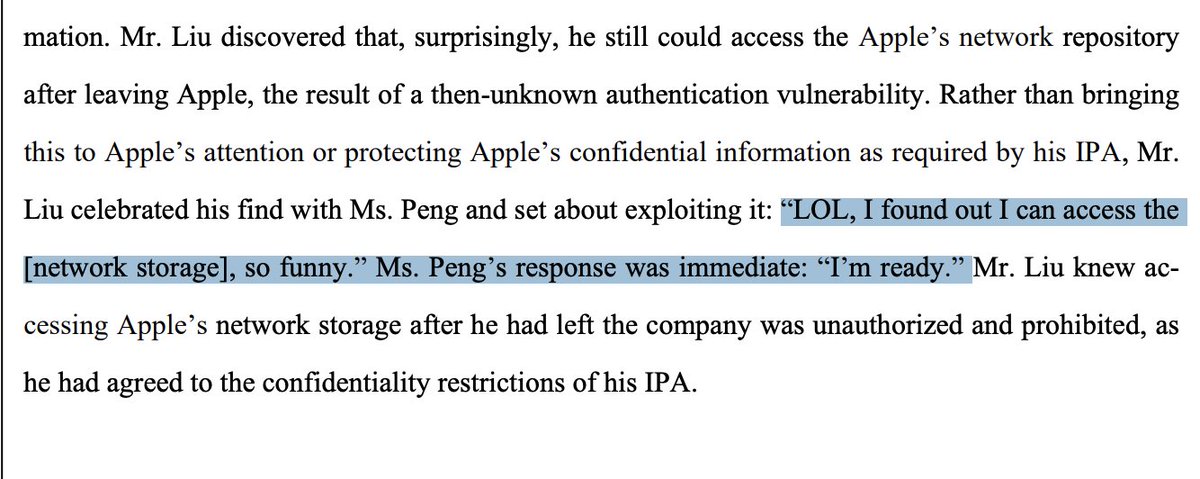
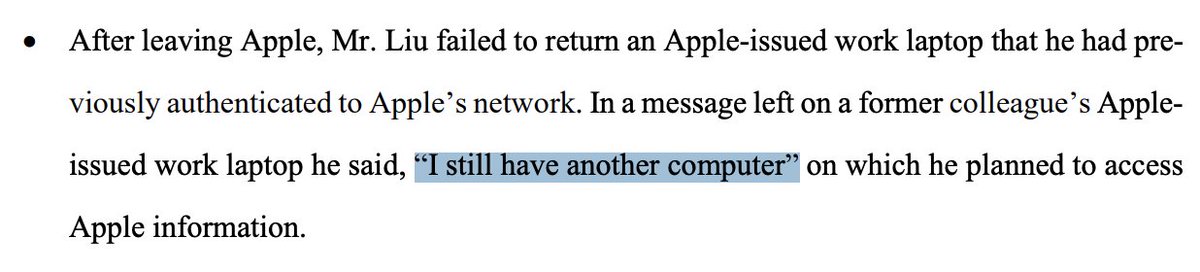
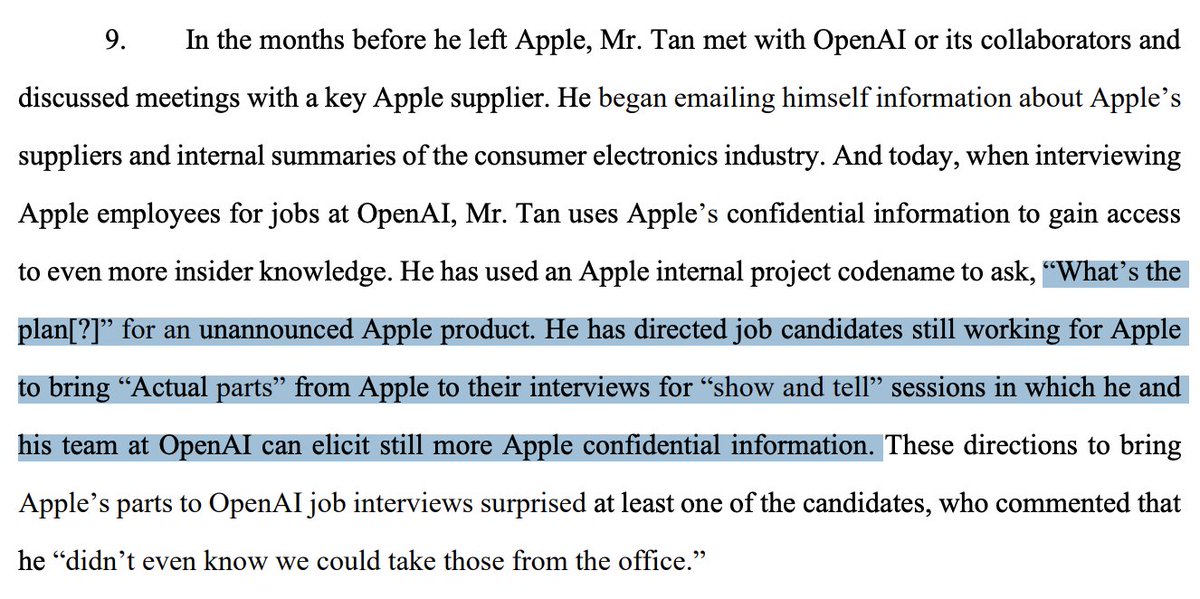
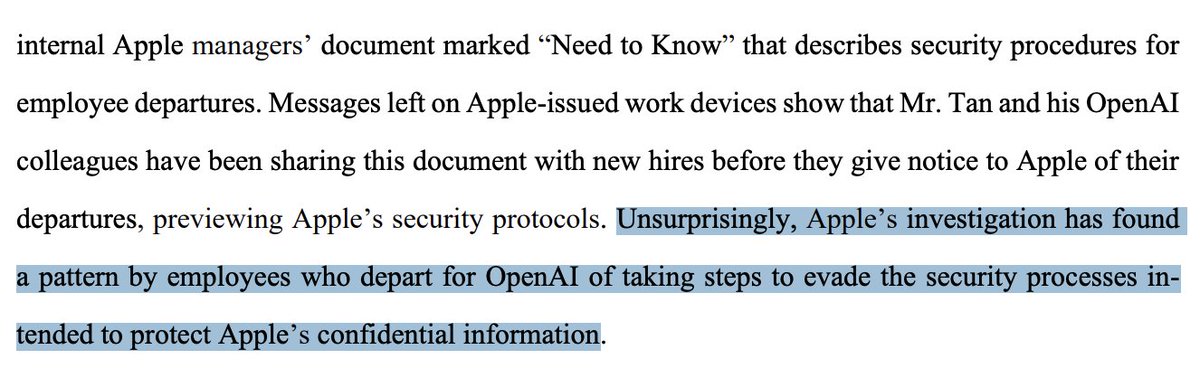
Apple has filed a lawsuit against OpenAI, alleging the theft of trade secrets through the recruitment of former Apple employees and illicit acquisition of confidential information. The complaint details accusations of employees downloading sensitive files, coaching others on evasion, and OpenAI interviewers using internal codenames to extract product details.
Why it matters
This lawsuit highlights significant risks related to intellectual property protection and employee offboarding in the competitive tech industry, particularly concerning AI talent acquisition.
How to implement this in your domain
- 1Review and strengthen intellectual property protection policies, especially regarding departing employees.
- 2Implement enhanced digital forensics and monitoring for unusual data access or downloads by employees.
- 3Educate HR and recruiting teams on ethical hiring practices, ensuring interview processes do not solicit confidential information.
- 4Establish clear protocols for managing company-issued hardware and access after an employee's departure.
- 5Communicate with suppliers to reinforce confidentiality agreements and verify authorization for proprietary processes.
Original post by @AiBreakfast
"Apple just sued OpenAI for stealing trade secrets The 41 page complaint is now online Some of the quotes are brutal 🧵👇 The most damaging exchange: “LOL, I found out I can access the [network storage], so funny.” The Apple employee allegedly replied: “I’m ready.” Apple says the…"
View on XOriginally posted by @AiBreakfast on X · view source
Want to go deeper?
Turn these trends into skills with Learnijoy's hands-on AI & tech courses.
Explore coursesMore in AI News & Tools
Slack Transforms into AI Research Analyst with Apify MCP
Teams can now build an AI research analyst directly within Slack using n8n and the Apify MCP server, enabling real-time answers to questions with live web data.
TessIndex Introduces Verified Identity System for the Autonomous Agent Economy
TessIndex proposes a capability-verified identity system for autonomous software agents, addressing the lack of persistent identity, verifiable capability claims, and economic valuation in the emerging agent economy. It uses a dual-plane architecture with blockchain for commitments and centralized servers for dynamic metadata.
HIRA Boosts Document Classification in Regulated Industries.
HIRA is a training-free, on-premises human-in-the-loop retrieval-augmented cascade designed for document classification in regulated industries, combining multiple retrieval methods and an LLM verifier to achieve high accuracy with minimal human review and no model retraining.