
Snap Unveils Large, Expensive AR Glasses for "New Era in Computing"
Key takeaways
- Snap's new AR glasses, SPECS, are larger and more expensive than many competitors.
- CEO Evan Spiegel frames them as the start of a "new era in computing."
- This launch challenges the trend towards miniaturization in AR hardware.
- The strategy may target specific use cases or professional markets.
Who benefits
Summary
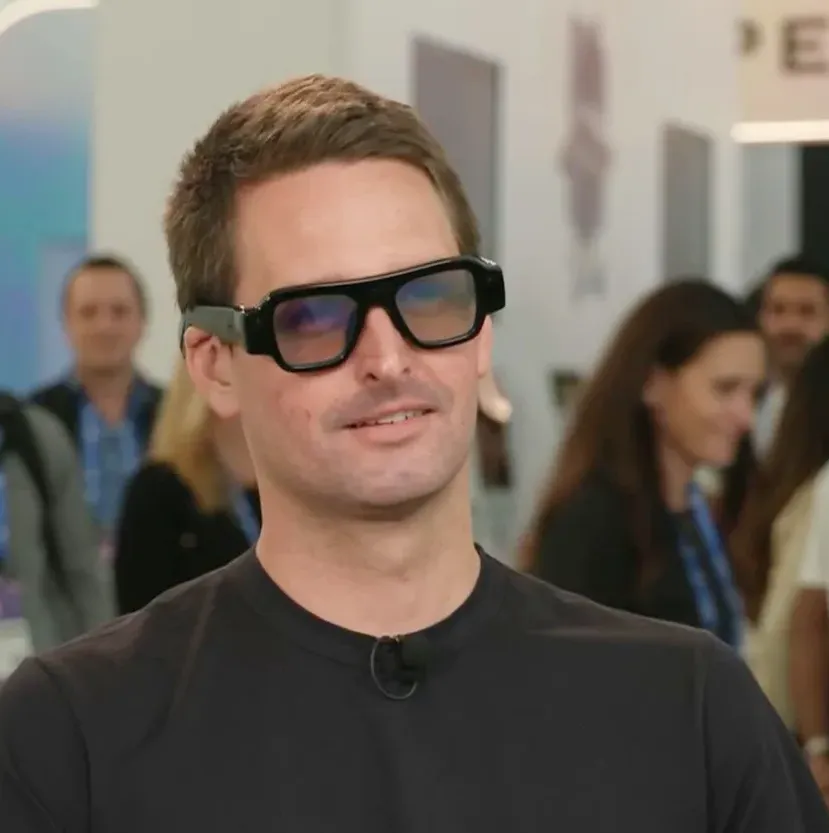
Snap has introduced its new $2,195 AR glasses, SPECS, which CEO Evan Spiegel describes as marking "the beginning of a new era in computing," despite their larger size compared to current market trends.
Why it matters
This launch indicates a potential shift in AR hardware strategy, challenging the industry's focus on miniaturization and suggesting new directions for immersive computing experiences.
How to implement this in your domain
- 1Monitor: Track the market reception and use cases for Snap's new AR glasses.
- 2Evaluate: Assess the implications of larger form factor AR devices for enterprise applications.
- 3Consider: Explore how such devices might integrate into existing workflows or create new opportunities.
- 4Research: Investigate the underlying technology and potential developer tools for this platform.
Original post by @TheRundownAI
"In a world where AR glasses keep getting smaller and more discreet, Snap showed up with a pair big enough to frame mog them all. The $2,195 SPECS are what CEO Evan Spiegel calls "the beginning of a new era in computing.""
View on XOriginally posted by @TheRundownAI on X · view source
Want to go deeper?
Turn these trends into skills with Learnijoy's hands-on AI & tech courses.
Explore coursesMore in AI News & Tools
OpenAI Disrupts Cambodia-Based Scam Operation Using ChatGPT
OpenAI successfully intervened to disrupt a criminal scam operation originating from Cambodia that was leveraging ChatGPT for various fraudulent schemes, including investment, romance, gambling, and impersonation.
AI Controversy Hits Billboard Hot 100 with Fenix Flexin's "Rubberz"
A song by Fenix Flexin, "Rubberz," has reached the Billboard Hot 100, but its AI-generated origins are being questioned due to its stylistic departure and the use of AI for its cover art. The artist denies the accusations but has not fully clarified the song's creation process.

Anthropic and OpenAI Diversify AI Compute Beyond NVIDIA
The latest State of AI compute index reveals that Anthropic has significantly increased its use of AMD MI450s, making non-NVIDIA silicon account for 7 out of its 8 gigawatts of contracted compute. OpenAI also shows substantial diversification, with 16.75 out of 26.75 gigawatts of its compute coming from non-NVIDIA providers like AMD, Broadcom, and Cerebras.