
Grok Build CLI Tool Open Sourced, Features Mermaid Renderer
Summary
The Grok Build CLI tool, written in Rust, has been open-sourced, revealing a significant codebase and interesting features. A notable highlight is its self-contained terminal renderer for Mermaid diagrams, which uses Unicode box-art.
Why it matters
Developers and engineers gain access to a substantial new open-source build tool and a novel way to render diagrams, potentially improving workflow and documentation.
How to implement this in your domain
- 1Explore the Grok Build CLI tool's open-source repository for build system insights and potential integration.
- 2Utilize the Mermaid terminal renderer for text-based diagram visualization in command-line environments.
- 3Integrate the WebAssembly version of the Mermaid renderer into web applications for dynamic diagram display.
- 4Contribute to the Grok Build project by identifying areas for improvement or new feature development.
Who benefits
Key takeaways
- xAI's Grok Build CLI tool is now open source, offering a large Rust codebase.
- It includes a unique terminal renderer for Mermaid diagrams using Unicode box-art.
- The Mermaid renderer is also available as WebAssembly for browser use.
- This provides new tools for developers to visualize and manage project structures.
Original post by @simonw
"I poked around in the just open sourced Grok Build CLI tool - 844,000 lines of Rust code! - and dug up a few interesting highlights, including a "self-contained terminal renderer for Mermaid diagrams" that renders them using Unicode box-art! I couldn't resist extracting that Rust…"
View on X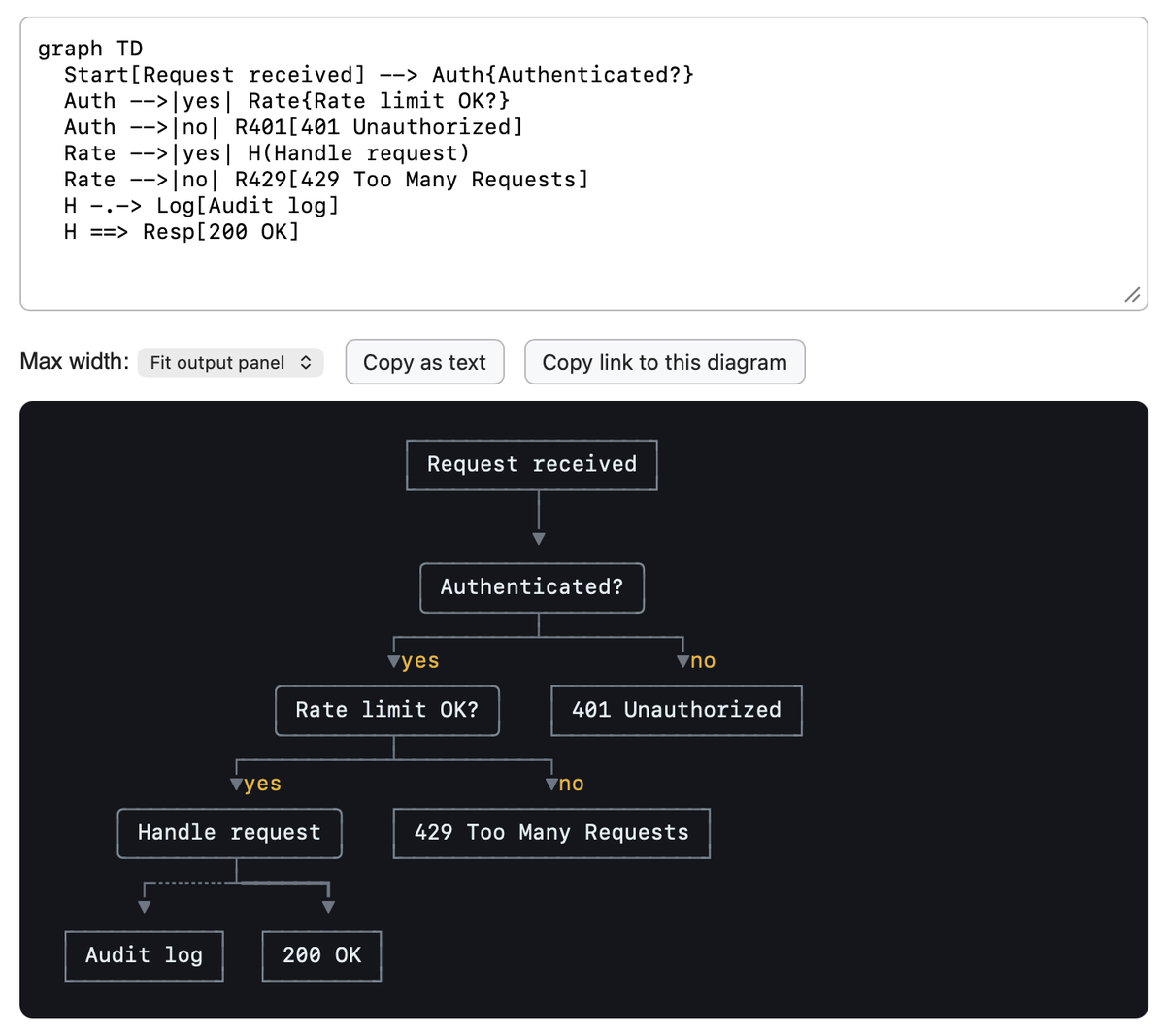
Originally posted by @simonw on X · view source
Want to go deeper?
Turn these trends into skills with Learnijoy's hands-on AI & tech courses.
Explore coursesMore in AI Engineering & DevTools
Build an AI Knowledge Base with Claude in 30 Minutes
This post outlines a rapid method to construct an AI-powered knowledge base using Claude, designed to streamline information access and onboarding processes. It addresses challenges with disparate documentation by leveraging AI for efficient knowledge retrieval.
Optimal Prompting: Thin Prompts, Rich Context, Lean Skills
An ideal prompting technique for AI models involves using concise prompts, providing extensive contextual artifacts, and employing minimal, dynamically loaded skills. This approach aims to optimize AI interaction and performance.
ChatGPT Voice Mode Poised for Mainstream Adoption
The author expresses enthusiasm for ChatGPT's voice mode, noting its potential to significantly impact user interaction despite low current adoption. They highlight the irony that early consumer AI was voice-based, yet ChatGPT's advanced voice capabilities are superior.