
GLM-5.2 Touted as Potentially Most Powerful Open-Weight Text LLM
Summary
A new large language model, GLM-5.2, is being highlighted as potentially the most powerful text-only open-weight LLM available.
Why it matters
The emergence of powerful open-weight LLMs like GLM-5.2 provides developers and researchers with accessible, high-performance tools for building advanced AI applications without proprietary restrictions, fostering innovation and reducing development costs.
How to implement this in your domain
- 1Investigate GLM-5.2's performance benchmarks and community reviews.
- 2Download and deploy GLM-5.2 for specific text generation or analysis tasks.
- 3Compare its output quality and efficiency against other open-source or proprietary LLMs.
- 4Integrate GLM-5.2 into existing AI pipelines for enhanced text processing capabilities.
Who benefits
Key takeaways
- GLM-5.2 is positioned as a top-tier open-weight text-only LLM.
- Open-weight models offer flexibility and cost-effectiveness for AI development.
- Professionals should evaluate its capabilities for various NLP applications.
- This model could drive innovation in text-based AI solutions.
Original post by Simon Willison's Weblog
"GLM-5.2 is probably the most powerful text-only open weights LLM"
View on XOriginally posted by Simon Willison's Weblog on X · view source
Want to go deeper?
Turn these trends into skills with Learnijoy's hands-on AI & tech courses.
Explore coursesMore in AI Research

Visualizing Three Years of AI Progress with Modelscope and Grok
The post showcases a visual comparison demonstrating three years of AI progress, contrasting Modelscope with Grok Imagine 1.5.

LifeSciBench Introduced: A New AI Benchmark for Life Sciences Research
A new benchmark called LifeSciBench has been launched to evaluate and enhance AI's effectiveness in real-world life science research. Developed with 173 scientists, it includes 750 expert-authored tasks across seven biological research workflows.
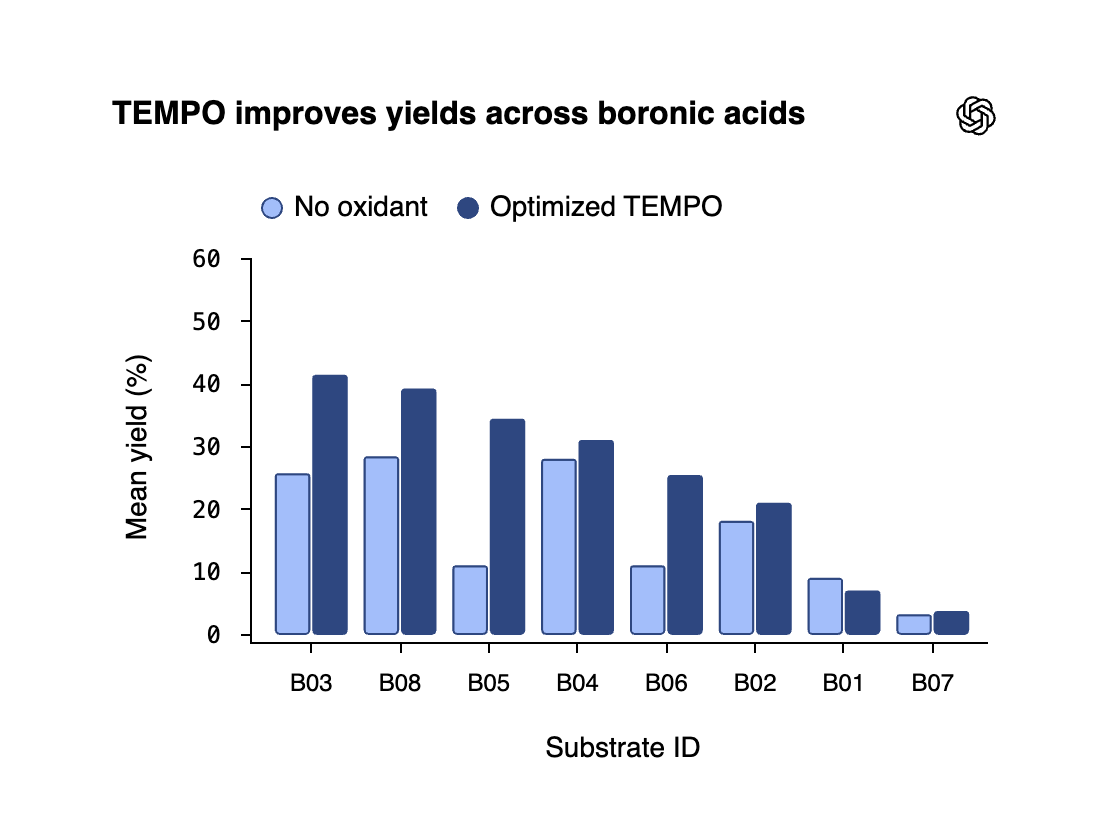
GPT-5.4 and AI Chemist Enhance Drug Discovery Reaction Yields
GPT-5.4, in conjunction with Molecule.one's Maria AI, significantly improved the Chan-Lam coupling reaction, a crucial step in medicinal chemistry, by proposing an optimized method that led to higher yields in drug discovery. The AI system reviewed literature, designed experiments, and analyzed results, with human chemists validating the findings.