
Drones and AI Accelerate Brazil Forest Restoration
Summary
Morfo, a French-Brazilian startup, is utilizing drones and AI to rapidly restore degraded land in Brazil by seeding up to 50 hectares daily. Their AI analyzes soil data to select optimal native species for diverse forest ecosystems, and drones monitor regrowth post-planting.
Why it matters
This demonstrates a practical, scalable application of AI and robotics for environmental challenges, offering a model for efficiency and impact in large-scale ecological projects. Professionals in sustainability, agriculture, and logistics can learn from this integrated approach.
How to implement this in your domain
- 1Identify environmental challenges in your industry that could benefit from drone or AI-driven solutions.
- 2Research existing AI models or drone technologies applicable to large-scale data collection and analysis.
- 3Pilot a small-scale project using similar integrated technologies to assess feasibility and impact.
- 4Collaborate with environmental tech startups to explore partnerships for sustainable initiatives.
Who benefits
Key takeaways
- Drones and AI can significantly accelerate large-scale environmental restoration efforts.
- AI optimizes seed selection based on soil data, promoting biodiversity and carbon storage.
- Post-planting monitoring uses drones and satellites for effective tracking.
- This model offers a scalable solution for ecological challenges globally.
Original post by @TheRundownAI
"This startup is using drones and artificial intelligence to accelerate forest restoration across degraded land in Brazil. Morfo, a French-Brazilian company, can seed roughly 50 hectares a day with a single drone, work that would take manual crews far longer, by firing biodegradab…"
View on XOriginally posted by @TheRundownAI on X · view source
Want to go deeper?
Turn these trends into skills with Learnijoy's hands-on AI & tech courses.
Explore coursesMore in AI Engineering & DevTools
Zapier vs. Tray: Enterprise Automation Platform Comparison for 2026
This post compares Zapier and Tray.io, evaluating which platform is better suited for enterprise automation needs by balancing power and ease of use. It argues that the best tools scale for complex requirements while remaining intuitive for all users.
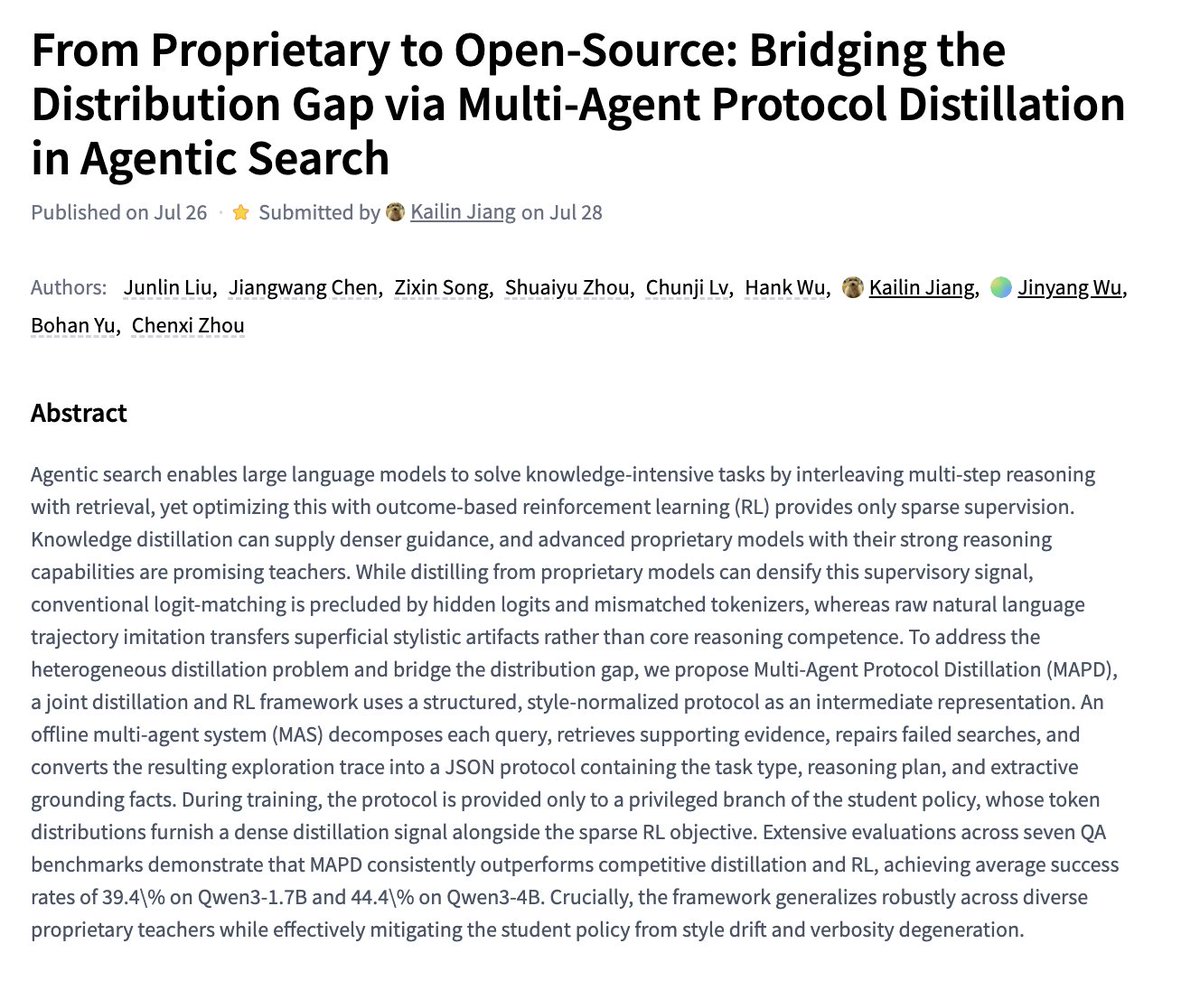
Multi-Agent Protocol Distillation Bridges Proprietary to Open-Source Search.
A new research paper explores a method called Multi-Agent Protocol Distillation to transition proprietary agentic search systems to open-source alternatives. This technique aims to overcome the distribution gap between different agent architectures.
Perplexity Pro Integrates Model Council with Computer Credits.
Perplexity Pro users can now access the Model Council feature using their Computer credits, a popular tool for research in legal, medical, and financial fields that benefits from diverse AI perspectives.