
Silicon Valley's "Prepper" Culture: A Long-Standing Trend
Summary
A long-time Silicon Valley resident observes that a "prepper" mentality among a subset of tech professionals is not new, recalling a similar intense wave in 2017. The sentiment suggests that current trends in preparedness are not dramatically different from past cycles.
Why it matters
This offers a historical perspective on certain cultural trends within the tech industry, reminding professionals that some behaviors, even seemingly extreme ones, are cyclical rather than entirely new. It encourages a nuanced view of current events and their historical precedents.
How to implement this in your domain
- 1Analyze historical trends in tech culture to understand recurring patterns.
- 2Foster a balanced perspective on emerging social and cultural phenomena within the industry.
- 3Engage in discussions that provide historical context to current events.
- 4Consider the long-term implications of cultural shifts rather than reacting to short-term fads.
- 5Promote critical thinking about perceived "new" trends by comparing them to past cycles.
Who benefits
Key takeaways
- "Prepper" culture in Silicon Valley is a recurring phenomenon.
- Similar trends were observed in previous years, like 2017.
- Current preparedness trends may not be dramatically new.
- Historical context is important for understanding tech culture.
Original post by @martin_casado
"Having been in the valley for over 25 years, I don’t remember a time when a subset of folks weren’t doing this. 2017 had an intense prepper wave. It doesn’t feel dramatically different now. Or maybe I’m hanging with the wrong folks … @nerdenberger 100000% @RealAstropulse haha. br…"
View on X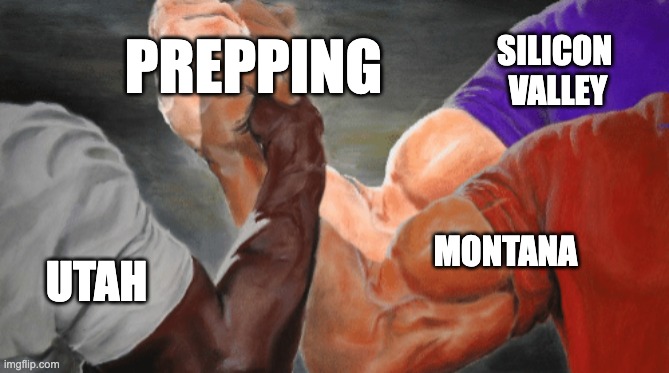
Originally posted by @martin_casado on X · view source
Want to go deeper?
Turn these trends into skills with Learnijoy's hands-on AI & tech courses.
Explore coursesMore in AI News & Tools
AIGen Automates AI Bill of Materials Generation for MLOps Compliance.
AIGen is a new modular tool that automates the generation of AI Bills of Materials (AIBoMs) compliant with SPDX 3.0 AI profiles, integrating with MLflow and using hybrid methods. It aims to streamline documentation for AI systems, supporting compliance with regulations like the EU AI Act.
RAGuard Defends Against Data Poisoning in Retrieval-Augmented LLMs
RAGuard is a new layered defense framework designed to protect Retrieval-Augmented Generation (RAG) systems from data poisoning attacks. It combines adversarial retriever fine-tuning with a novel Zero-Knowledge Inference Patch (ZKIP) to effectively neutralize malicious passages without requiring poison labels or model internals.
User Agents Drive New Platform Competition in Recommendation Markets
This research explores "agentic recommendation markets" where user agents specify needs before choosing a platform, forcing platforms to compete for attention. It finds that while user-centric recommendation expands options, platforms engage in strategic, selectively positive explanations, which user agents can mitigate by linking platform actions to user feedback.