
UpliftBench Reveals Mismatches in Uplift Model Evaluation Metrics
Key takeaways
- Uplift model performance disagreements often stem from metric choice, not model quality.
- Traditional ranking metrics like Qini and AUUC can be insufficient for certain policy objectives.
- Effect accuracy and policy-risk selection are crucial for robust uplift evaluation.
- Calibrating decision thresholds significantly improves policy outcomes.
Who benefits
Summary
UpliftBench, a new multi-objective protocol, evaluates 12 uplift estimators across seven datasets, revealing that disagreements in benchmark performance are often due to metric choice, not model quality. It highlights issues with common metrics like Qini and AUUC for certain policy objectives.
Why it matters
Professionals using uplift modeling for marketing, sales, or healthcare interventions can make more informed decisions about model selection and evaluation, ensuring that their chosen metrics truly align with their business objectives and lead to better outcomes.
How to implement this in your domain
- 1Review your current uplift modeling evaluation metrics to ensure they align with your specific business objectives.
- 2Utilize the UpliftBench framework and its protocols to rigorously evaluate uplift estimators in your domain.
- 3Prioritize effect accuracy and policy-risk selection over traditional ranking metrics like Qini and AUUC where appropriate.
- 4Implement decision threshold calibration for your uplift models to improve policy outcomes.
- 5Contribute to or leverage the UpliftBench living leaderboard for insights into estimator performance.
Original post by Binshuang Li
"arXiv:2608.00915v1 Announce Type: new Abstract: Uplift modeling (conditional-average-treatment-effect estimation) drives personalized targeting, yet published uplift benchmarks frequently disagree on which estimator performs best; we show the disagreement is substantially about m…"
View on XOriginally posted by Binshuang Li on X · view source
Want to go deeper?
Turn these trends into skills with Learnijoy's hands-on AI & tech courses.
Explore coursesMore in AI in Marketing
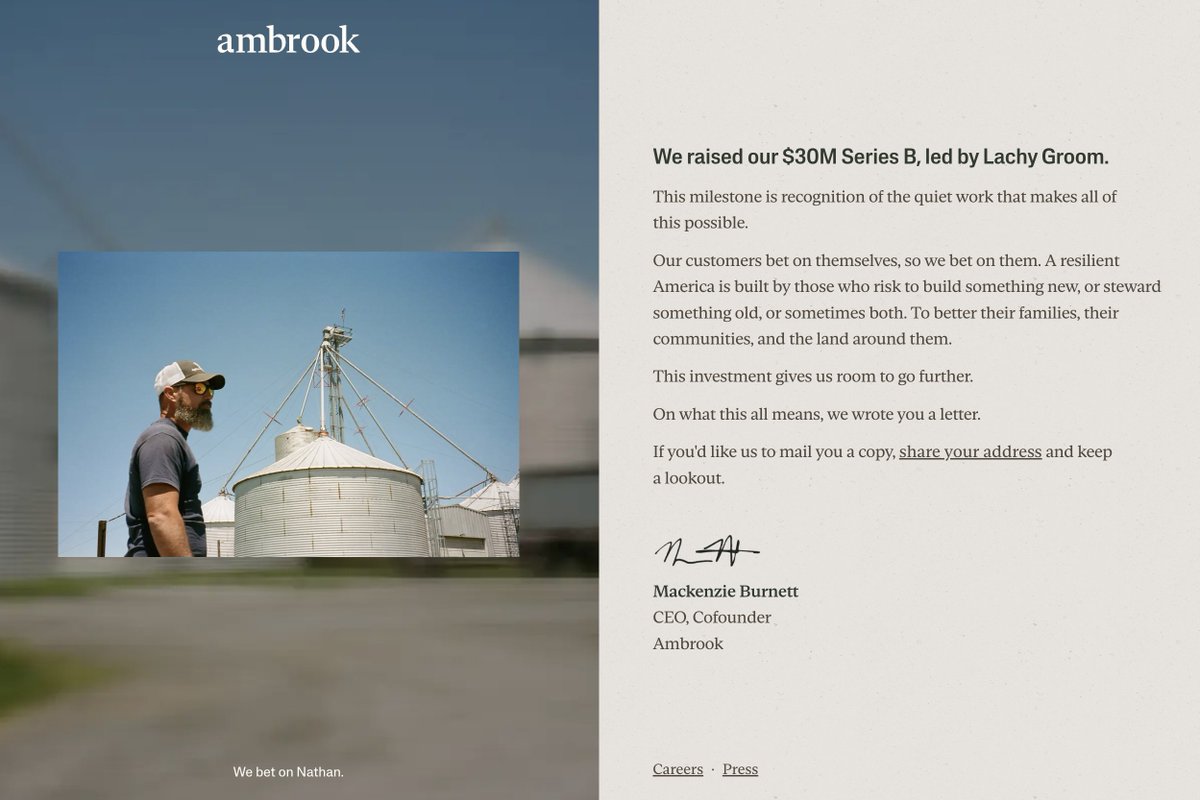
Ambrook's Unique Marketing Strategy Emphasizes Customer Focus
The post praises Ambrook's approach to building its brand, highlighting a simple announcement site that focuses on its target customers and intentionally slows down the information delivery by using a physical letter for further details. This strategy is seen as a form of earned differentiation.
Slate Tool Enhances AI-Generated Video Workflow
The post describes Slate as a valuable tool for quickly assembling AI-generated video shots to test their coherence, streamlining the creative workflow without needing to export to a full-fledged editor like Resolve. It highlights Invideo Official's focus on reducing friction for creative professionals.

AI Tool Generates Surreal Video Art from Detailed Prompt
A user demonstrates generating a 10-second photorealistic surreal video using FlowbyGoogle's free AI tool, providing the exact prompt used for the creation. The video depicts a person calmly sipping tea as their living room floats upside down in outer space.