
Trump AI Cybersecurity Framework Raises Transparency and Competition Concerns

Key takeaways
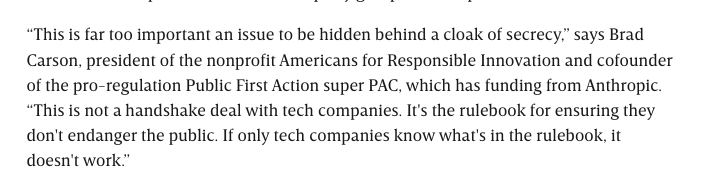
- The Trump AI cybersecurity framework lacks transparency, with details known only to large firms and the White House.
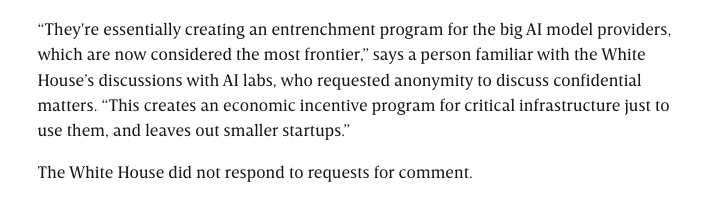
- Concerns exist that it could create an anti-competitive licensing regime favoring big tech.
- The exclusion of startups and open models raises questions about fairness and innovation.
- The framework's voluntary nature and specific exclusions appear contradictory.
Who benefits
Summary
The Trump administration's AI cybersecurity framework is criticized for its lack of transparency, with only large AI companies and the White House privy to its details. Critics worry this could create an opaque licensing regime, favoring established players and hindering startups.
Why it matters
This framework could significantly shape the future regulatory landscape for AI, impacting market competition, compliance requirements, and the operational freedom of AI developers and companies.
How to implement this in your domain
- 1Monitor official government announcements and tech news for updates on the framework's details.
- 2Engage with industry associations to voice concerns about transparency and competition.
- 3Assess potential impacts on your company's AI development and deployment strategies.
- 4Prepare for potential future compliance requirements, even if the framework is currently voluntary.
- 5Advocate for inclusive policy-making that considers the needs of startups and open-source initiatives.
Original post by @ZeffMax
"The big worry about Trump's AI cybersecurity framework early on was that it would become an opaque licensing regime—one that locks in a few winners and shuts out startups. Now, big AI companies are the only ones who know what the framework says. W/ @willknight & @LaurenGoode…"
View on XPrimary sources
Originally posted by @ZeffMax on X · view source
Want to go deeper?
Turn these trends into skills with Learnijoy's hands-on AI & tech courses.
Explore coursesMore in AI News & Tools
Human Labor Essential for AI-Generated Content Assembly
The post argues that generative AI output often requires significant human effort for assembly and refinement. It highlights that projects using AI-generated footage still involve substantial human creative labor.

AI Used to Reverse Engineer Faulty Device Driver
A user is leveraging the AI model Claude to reverse engineer a custom driver from a binary file for a children's globe with a malfunctioning driver. This demonstrates AI's potential in complex technical problem-solving.
Creators Must Define Personal AI Use Boundaries
The post argues that creators should individually determine their comfort level with AI integration, emphasizing that there's no universal rule. It highlights that audiences expect authenticity, especially from creators known for their personal opinions, and suggests AI for research is a legitimate use.