
SQLite Recursive CTE Powers Novel Ray Tracer Implementation
▶ The 60-second brief
Summary
A new project demonstrates a ray tracer built entirely using SQLite's recursive Common Table Expressions, storing its state on disk. This unique approach allows other tools to query the ray tracer's state in real-time, exemplified by a custom HTML+JS minimap.
Why it matters
This demonstrates creative and unexpected uses for established database technologies, potentially inspiring novel architectural patterns for data-driven applications or simulations. It highlights how existing tools can be pushed beyond their conventional boundaries.
How to implement this in your domain
- 1Explore using recursive CTEs in SQL for complex data processing or simulations beyond typical data retrieval.
- 2Investigate SQLite's capabilities for persistent state management in lightweight, embeddable applications.
- 3Design systems where core application state is exposed via a database, enabling real-time external tool integration.
- 4Experiment with building custom visualization or monitoring tools that directly query application databases.
Who benefits
Key takeaways
- SQLite recursive CTEs can be used for complex computational tasks like ray tracing.
- Storing application state in a database enables real-time external querying and integration.
- Creative use of existing technologies can lead to novel and efficient solutions.
- This approach offers new possibilities for data-driven simulations and interactive tools.
Original post by @simonw
"This is really cool! It renders frames using a ray tracer implemented as a SQLite recursive CTE Since state is stored in a SQLite database on-disk you can have other tools query it while you are playing - I rolled this custom HTML+JS view that adds a minimap"
View on X
Originally posted by @simonw on X · view source
Want to go deeper?
Turn these trends into skills with Learnijoy's hands-on AI & tech courses.
Explore coursesMore in AI Engineering & DevTools
Muse Spark 1.1 Rivals GPT-5.6 Sol on HealthBench Pro, Cuts Costs
Muse Spark 1.1 demonstrates comparable, possibly superior, performance to GPT-5.6 Sol on the HealthBench Pro benchmark. This achievement is notable as it comes at a significantly lower operational cost.
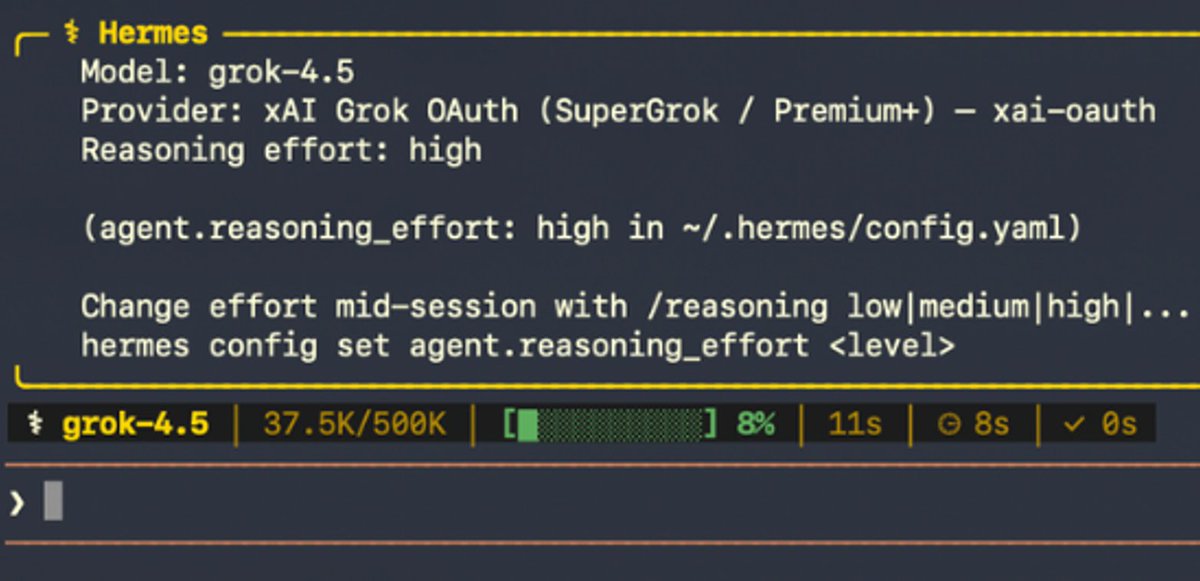
Explore Grok 4.5 for AI Agent Integration
The post recommends integrating Grok 4.5 into AI agents, implying it offers significant benefits for such applications. It encourages users to try it out for improved performance.
Claude Tag Enhances Expressive Artifacts and Collaborative Dashboards
The "Claude Tag" feature now allows for more expressive artifacts that can be creatively combined, enabling users to build collaborative project dashboards. These dashboards can be edited by multiple users or through local "Claude Code" sessions.